






Every brand wants to identify individuals who have outsized impact on their reputation, reach, and revenue. Traditional influencer identification relies on vanity metrics: follower count, likes per post, or engagement rate.
A celebrity with ten million followers commands high fees but may drive no measurable business results. A micro influencer with ten thousand loyal followers in a niche market might generate hundreds of sales.
A customer who tweets about your brand once a month with genuine enthusiasm, a brand advocate, may be more valuable than any paid influencer.
The problem is that these valuable individuals are invisible to traditional social media monitoring. A tool that only tracks mentions cannot distinguish between a one off complainer and a repeat advocate.
Social listening algorithms solve this by analyzing not just what people say, but the structure of conversations, the authority of their networks, and the consistency of their sentiment over time.
These algorithms map the social graph of brand related conversations to identify three distinct roles:
- Influencers: Individuals with high reach and authority who can shape public opinion. They are typically not your customers but are worth engaging for amplification.
- Brand advocates: Existing customers who consistently express positive sentiment, refer others, and defend you against criticism. They are your most valuable retention assets.
- Detractors: Individuals with high influence but negative sentiment. They require damage control or conversion.
How Social Listening Algorithms Work
Social listening platforms use graph based algorithms and natural language processing to calculate influence scores. Key factors include reach, resonance, relevance, sentiment consistency, and network authority.
Reach measures the number of unique users reached via retweets, shares, or mentions. Not just follower count but actual propagation of content.
Resonance measures how often the individual’s content is engaged with, relative to their network size. High resonance indicates genuine audience interest.
Relevance measures how often they talk about your brand or category, not just random topics. An influential food blogger has no value to a B2B software company.
Sentiment consistency tracks positive mentions over time, not just a single enthusiastic post. Consistency separates true advocates from one time happy customers.
Network authority reflects the influence of the people who follow and engage with them. A user followed by industry leaders has higher authority than one followed by bots.
Influencer vs. Advocate vs. Customer
The distinction matters for strategy. Here is how to think about each role:
- Macro influencer(not a customer, usually positive sentiment) → Action: paid campaigns, product seeding.
- Micro influencer(may be a customer, genuinely positive) → Action: free product, affiliate programs.
- Brand advocate(existing customer, consistently positive) → Action: loyalty rewards, referral programs.
- Promoter customer(existing customer, intermittently positive) → Action: nurture into advocate.
- Detractor(could be customer or not, consistently negative) → Action: service recovery, monitoring.
Why CRM Needs Influencer and Advocate Data
Influencers and advocates are not just social media metrics. They are relationships that should be managed in the CRM.
An influencer who mentions your brand should have a contact record with their influence score, platform, and past interactions. A brand advocate should be tagged for referral program invitations.
When an influencer becomes a customer, their record should merge their social influence data with their purchase history.
Graph Based Influence
Google’s PageRank algorithm measures webpage importance by counting links from other important pages. Social influence algorithms work similarly.
They analyze the network graph of retweets, mentions, and replies. Key metrics include in degree, how many unique users mention or retweet this person, and network centrality, are they connected to other influential accounts.
Tools like Brandwatch and Talkwalker calculate a composite influence score from zero to one hundred. A score above eighty indicates top tier influence in your topic domain.
Resonance and Engagement Rate
Pure follower count is misleading; many followers may be bots or inactive. Resonance measures how much an individual’s content actually engages their audience.
Engagement rate equals likes plus replies plus retweets plus shares divided by follower count. A micro influencer with ten thousand followers and five percent engagement is more valuable than a celebrity with one million followers and 0.1 percent engagement.
High velocity engagement, where interaction happens quickly after posting, indicates an active, attentive audience.
Relevance and Sentiment Weighting
An influential food blogger has no value to a B2B software company. Relevance filters ensure scores are specific to your brand or category. Keyword frequency and semantic proximity matter.
An influencer with mostly negative mentions is a risk, not an opportunity. Algorithms weight influence scores by sentiment. Net sentiment score equals positive mentions minus negative mentions divided by total mentions.
A user with ten positive and two negative mentions has net sentiment 0.67, which multiplies their raw influence score.
Time Decay and Recency
An influencer who was active six months ago but silent recently is less valuable. Algorithms apply time decay so that recent mentions carry more weight.
A mention today is worth full value. A mention thirty days ago is worth half. A mention sixty days ago is worth one quarter. This ensures current influence is prioritized.
Identifying Advocates vs. Influencers
Influencers and advocates are different. Use separate scoring models.
The influencer model weights graph score and resonance heavily. Sentiment matters less. Relevance is important.
The advocate model weights sentiment and recency heavily. Graph score matters less because a customer with five hundred followers who always says positive things is still valuable.
CRM Integration of Influence Scores
Once calculated, influence scores should be written back to the CRM as custom fields on contact or lead records:
- Social Influence Score(zero to one hundred)
- Social Sentiment Score(negative one to positive one, last thirty days)
- Advocate Score(zero to one hundred, weighted for positivity and frequency)
These fields trigger workflows. A contact with Advocate Score above eighty receives an invitation to a referral program. A lead with Influence Score above seventy and positive sentiment is flagged for VIP sales outreach.
From Individuals to Networks
A single high scoring influencer is valuable. But a cluster of micro influencers who collectively reach a niche community may be even more valuable.
Network mapping visualizes relationships as nodes (users) and edges (mentions, retweets, replies). Algorithms identify hubs, bridges, and clusters.
Hubs are users with many connections, often macro influencers. Bridges connect otherwise disconnected communities. Clusters are groups who interact frequently but rarely with outsiders.
For influencer mapping, you want to identify communities relevant to your brand, find the top influencers within each community, and locate bridge users who connect your target communities.
Prioritizing Engagement
Use a simple two by two matrix:
- High influence, high sentiment (Stars)→ Invest in paid partnerships and exclusive access.
- High influence, low sentiment (Risks)→ Monitor closely and engage with service recovery.
- Low influence, high sentiment (Advocates)→ Recognize publicly and invite to loyalty programs.
- Low influence, low sentiment (Noise)→ Ignore unless part of a larger negative trend.
Advocate Mapping for CRM Retention
Brand advocates are existing customers. They are already in your CRM. The challenge is identifying them. Use CRM data plus social listening.
CRM data includes high NPS scores, repeat purchases, low support tickets, and long tenure. Social data includes positive brand mentions, referrals, and engagement with your content.
Merge these sources to create an Advocate Score in the CRM. Automatically add high scoring customers to advocate programs: early access to new products, exclusive webinars, referral bonuses, or recognition on your website.
Building an Influence Dashboard Inside the CRM
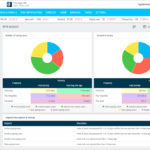
A dedicated dashboard for influencers and advocates should be accessible to marketing, sales, and customer success. Key components include:
- Top influencersby influence score from the last thirty days, with columns for handle, score, sentiment, last mention date, and status.
- Rising influencerswhose score increased by more than twenty percent in the last thirty days. Prioritize early engagement.
- Advocate leaderboardshowing existing customers with highest advocate score, including referral count and revenue attributed.
- Action queuelisting influencers requiring action: high influence with positive sentiment not yet contacted, or high influence with negative sentiment needing service recovery.
The dashboard refreshes daily via API from the social listening tool. Each row links to the contact record in the CRM.
Automated Outreach Workflows
Use CRM automation to engage influencers and advocates at scale while keeping personalization.
Workflow for new high influence, positive mention: The social listening tool detects a user with influence score above seventy five and positive sentiment. The CRM creates a lead if needed, assigns a task to send a thank you message within twenty four hours.
If the user mentions the brand positively again within seven days, the workflow escalates to an affiliate program invitation.
Workflow for advocate identification: A weekly batch job scans customer records with high NPS, long tenure, and significant lifetime value. The CRM checks social listening for positive mentions in the last ninety days. If found, the advocate score updates and an automated email sends a referral link.
Measuring Long Term Value
Attributing revenue to influencers is straightforward with affiliate links and promo codes. Advocates are harder because their value is often indirect: referrals, positive word of mouth, and social proof.
Track direct metrics in the CRM: referral revenue, affiliate conversion rate, and cost per acquisition via influencer. Compare to paid social CPA.
Track indirect metrics via social listening and CRM correlation: share of voice lift, sentiment improvement, customer lifetime value of referred customers, and a composite brand health index.
Common Pitfalls to Avoid
Avoid ignoring platform differences. Influencers on Twitter may not be influential on Instagram. Map per platform.
Do not over weight high influence but low relevance users. A celebrity who mentions your brand once may drive vanity metrics but no sales. Check relevance and engagement quality.
Always validate with sales data. An influencer with great social metrics may have poor conversion. Use CRM attribution.
Do not rely on one time mapping. Networks change. Update monthly or quarterly.
Operationalizing Influence Intelligence
Identifying influencers and advocates is only the first step. The real value comes from operationalizing that intelligence inside the CRM. Influence scores and network maps must trigger specific actions: outreach tasks, referral program invitations, VIP support queues, and executive relationship management.
Without automation, insights become static reports that no one acts on. High scoring influencer leads should be routed to senior sales reps with a note that this prospect has high social influence and deserves relationship building.
As your program matures, expand beyond social listening to include email engagement, event participation, and product reviews from platforms like G2 and Trustpilot.
Mapping influencers and brand advocates using social listening algorithms turns raw social data into a strategic asset. Graph based influence scoring identifies who matters, not just who is loud. Sentiment weighting and time decay ensure relevance and recency. Network mapping reveals communities and bridges, enabling targeted engagement.
Operationalizing this intelligence inside the CRM, through dashboards, automated workflows, referral tracking, and lead scoring, transforms influence from a marketing metric into a revenue driver.
Advocates become a channel for low cost, high trust customer acquisition. Influencers amplify brand reach and credibility. Organizations that master this closed loop system stop chasing vanity metrics and start building a measurable, scalable engine of social capital.