
0%
Cargando contenido...

sergio.genry

Sentiment Analysis and Topic Modeling in Surveys and Support Calls

Every day, customer service teams handle hundreds of support calls, chat transcripts, and email threads. Marketing departments receive thousands of open ended survey responses. Product teams collect user feedback from app store reviews and social media comments. This unstructured text contains invaluable insights about customer satisfaction, pain points, and feature requests. Yet most organizations ignore…

Read More

From Descriptive Reports to Prescriptive Analytics Practical Cases in CRM

Most CRM systems are excellent at descriptive analytics. They answer the question: “What happened?” Sales dashboards show last quarter’s revenue. Marketing reports display email open rates and campaign conversions. Service dashboards list average response times and ticket volumes. These descriptions are necessary but insufficient for competitive advantage. Knowing what happened does not tell you why…

Read More

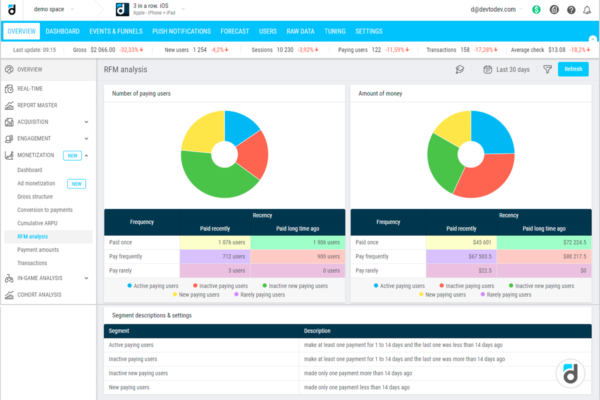
Designing and Interpreting RFM (Recency, Frequency, Monetary) Dashboards

RFM analysis is a data‑driven marketing technique that ranks customers based on three behavioral dimensions: how recently they bought (Recency), how often they buy (Frequency), and how much they spend (Monetary). Despite being decades old, RFM remains one of the most practical and actionable analytical tools in CRM. It does not require complex algorithms or…

Read More

Data Mining Applied to Customer Churn Prediction

Customer churn, also known as customer attrition, occurs when a customer stops doing business with a company. In subscription-based industries like software-as-a-service (SaaS), telecommunications, banking, insurance, and media streaming, churn is a critical metric. A customer who cancels a subscription, switches to a competitor, or simply stops purchasing represents lost future revenue and often higher…

Read More

Sales Force Automation (SFA)_ Keys to Optimizing the Sales Cycle

Sales Force Automation (SFA) refers to the software tools and strategies designed to automate the repetitive, administrative tasks that traditionally consume a salesperson’s day. These tasks include lead tracking, contact management, activity logging, pipeline visualization, quote generation, and sales forecasting. The primary goal of SFA is simple but powerful: free sales representatives from manual data entry…

Read More

Mobile CRM_ How to Empower Field Teams with Operational Tools

For decades, CRM was designed for office workers. Salespeople sat at desks, dialed phones, typed notes, and updated pipelines between meetings. Customer service agents worked from cubicles, answering calls and emails. That era has ended. Modern sales and service teams operate in the field, visiting clients, inspecting sites, delivering products, and solving problems on location….

Read More

Integrating CRM with ERP and Legacy Systems Challenges and Practical Solutions

Modern businesses run on two critical systems: Customer Relationship Management (CRM) and Enterprise Resource Planning (ERP). The CRM manages front office activities—sales, marketing, customer service. The ERP manages back office operations—order management, inventory, billing, supply chain, human resources, and financials. In theory, these systems should talk to each other seamlessly. In practice, they often operate…

Read More

Customer Service Infrastructure_ Ticketing, Queues, and SLAs in Operational CRM

Customer service is the frontline of any business. When a customer has a problem, a broken product, a billing error, or a technical glitch, their entire perception of your brand hinges on how quickly and effectively that problem is resolved. Operational CRM provides the technological backbone for this function through a structured customer service infrastructure…

Read More