



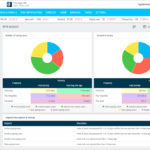





Sales Force Automation (SFA) refers to the software tools and strategies designed to automate the repetitive, administrative tasks that traditionally consume a salesperson’s day. These tasks include lead tracking, contact management, activity logging, pipeline visualization, quote generation, and sales forecasting.
The primary goal of SFA is simple but powerful: free sales representatives from manual data entry so they can focus on what truly drives revenue—selling, relationship-building, and closing deals.
The traditional sales cycle, from prospecting to closing, is often plagued by inefficiencies. Studies consistently show that salespeople spend up to thirty percent of their time on non-selling activities.
Updating spreadsheets, searching for lost emails, manually entering customer information into multiple systems, and generating quotes from scratch are just a few examples. These tasks not only waste time but also introduce errors and delays that frustrate potential buyers.
SFA eliminates much of this friction by centralizing all customer data in one place. It automates routine workflows and provides real-time visibility into each deal’s current status, transforming how sales teams operate.
The Operational Backbone of Sales
A well-implemented SFA system acts as the operational backbone of any modern sales organization. It doesn’t work in isolation; instead, it integrates seamlessly with marketing automation platforms, customer support tools, and even ERP systems.
This integration ensures that everyone who touches the customer—marketing, sales, billing, and support—has access to the same accurate, up-to-date information.
For example, when a marketing-qualified lead becomes a sales-qualified opportunity, an SFA system can automatically assign it to the right account executive. It can schedule a follow-up task or call, generate a quote template with pre-approved pricing, and log every interaction from that point forward.
Beyond operational efficiency, SFA offers significant strategic advantages. By automatically capturing every interaction—emails opened, proposals viewed, calls made, meetings held, and contracts signed—it builds a rich, auditable activity log.
This log can be analyzed to identify winning behaviors. Sales managers can determine which rep’s approach leads to faster closes, higher average deal sizes, or better win rates. They can also spot bottlenecks in the pipeline, such as deals that remain stuck in the negotiation stage for too long or leads that never receive timely follow-ups.
Intelligent Lead Prioritization
Optimizing the sales cycle with SFA begins with three fundamental keys: intelligent lead prioritization, real-time pipeline visibility, and automated follow-up sequences. Not all leads are equal.
Without SFA, sales reps often waste hours on cold prospects while hot opportunities go unnoticed. SFA solves this through automated lead scoring.
By assigning points based on demographic data, such as industry, company size, and job title, and behavioral data, such as website visits, email opens, and content downloads, the system ranks leads from hottest to coldest. Reps simply work the top of the list first.
This simple automation can increase conversion rates by thirty percent or more because human judgment is augmented by data-driven rules.
Real-Time Pipeline Visibility
A sales pipeline is only useful if it reflects reality. Manual pipeline updates are often delayed, biased (reps tend to be overly optimistic), or incomplete.
SFA provides a living pipeline that updates automatically as deals progress. Every email reply, every signed document, every completed task moves the deal visually through stages such as prospecting, qualification, needs analysis, proposal, negotiation, and closed won or closed lost.
Managers can see exactly where each deal stands at a glance, without interrupting reps for status updates. This transparency enables early intervention when a deal stalls.
Automated Follow-Up Sequences
Timely follow-up is the lifeblood of sales, yet it is also the most commonly dropped ball. Research shows that responding to a lead within five minutes increases conversion odds by nine times compared to waiting thirty minutes.
SFA automates this with drip sequences and task triggers. When a lead fills out a contact form, the system can instantly send a personalized email, assign a follow-up call task to the rep, and schedule a reminder for the next day.
If the lead does not open the email, the system can automatically send a different message or bump the priority. These micro-automations ensure no lead falls through the cracks, even when reps are busy.
Together, these three keys attack the most common leaks in the sales cycle: chasing the wrong leads, managing deals blind, and forgetting to follow up.
Accurate Sales Forecasting
After addressing lead prioritization, pipeline visibility, and automated follow-ups, the next three keys take SFA from useful to indispensable. These are accurate sales forecasting, mobile empowerment for field teams, and seamless quote-to-close automation.
Forecasting is notoriously difficult when reps manually update spreadsheets. Optimism bias, incomplete data, and inconsistent definitions (such as what “likely to close” really means) lead to forecasts that miss by forty percent or more.
SFA transforms forecasting by anchoring it in real activity data. The system learns which pipeline stages and deal attributes, including deal size, industry, and competitor presence, historically lead to wins or losses.
It then generates probabilistic forecasts based on actual sales stages, not gut feelings. Managers can see a weighted pipeline and roll that up into accurate weekly, monthly, and quarterly projections. This precision improves inventory planning, cash flow management, and board-level reporting.
Mobile Empowerment for Field Teams
Sales does not always happen at a desk. Field reps, account managers visiting clients, and trade show staff need access to customer data on the go.
SFA mobile apps put the entire sales cycle in their pocket. A rep can log a meeting note immediately after stepping out of a client’s office. They can pull up pricing information while waiting for an elevator, or even create and email a quote from a smartphone.
Offline mode ensures that work continues without internet access; data syncs automatically once connectivity returns. Mobile SFA also captures location-based intelligence, such as which prospects are nearby for an impromptu visit, and can trigger reminders based on geofencing.
The result is that no selling moment is lost to administrative friction.
Seamless Quote-to-Close Automation
The final stage of the sales cycle—creating a quote, getting approvals, sending the contract, and closing the deal—is often where momentum dies.
SFA eliminates delays by automating the entire quote-to-close workflow. When a deal reaches the proposal stage, the system can auto-populate a quote template with line items from the opportunity.
It can apply approved discount rules and route the quote to a manager for electronic signature. Once approved, the quote is emailed to the customer with a click-to-accept button.
Upon acceptance, the SFA system can automatically create an order, notify fulfillment, and trigger a welcome email, all without human intervention. This shaves days or even weeks off the sales cycle and dramatically improves the customer experience.
Performance Analytics at Rep and Team Levels
To complete the optimization of the sales cycle, the final two keys focus on measuring what works and refining sales processes over time. These are performance analytics and continuous process improvement powered by SFA data.
SFA systems are treasure troves of sales activity data. However, data alone is useless without analytics. Modern SFA platforms include built-in dashboards and reporting tools that transform raw logs into actionable insights.
At the individual rep level, managers can track metrics such as calls per day, emails sent, meetings booked, proposals delivered, and conversion rates at each pipeline stage. This answers critical questions: Which reps excel at prospecting but struggle with closing? Who needs coaching on negotiation?
At the team level, analytics reveal broader patterns: Which lead sources produce the highest win rates? What is the average sales cycle length by product line? Which months show seasonal slowdowns?
Continuous Process Improvement
The final key is perhaps the most powerful: using SFA data to continuously refine the sales cycle itself. Traditional sales processes are often static, designed once and followed for years.
SFA enables closed-loop learning where every closed deal, won or lost, feeds back into the system to improve future performance. For lost deals, SFA can capture loss reasons such as price, competitor, timing, or feature gap.
Aggregated over time, this data shows exactly why the company loses business. For won deals, SFA reveals which activities and sequences consistently lead to success.
Armed with this intelligence, sales operations teams can adjust lead scoring models. They can refine qualification criteria, update sales playbooks, and even modify pricing or product messaging.
Automation rules can be tweaked. For instance, shortening the time between follow-up emails if data shows responsiveness drops after twenty four hours. The result is a sales cycle that evolves and improves automatically, becoming shorter, more efficient, and more predictable with every quarter.
Sales Force Automation is not merely about replacing spreadsheets with software. When properly implemented with these eight keys—lead prioritization, pipeline visibility, automated follow-ups, accurate forecasting, mobile empowerment, quote-to-close automation, performance analytics, and continuous improvement—SFA transforms the entire sales cycle.
It empowers reps to sell more, managers to coach better, and organizations to grow faster, turning every customer interaction into a strategic advantage. Organizations that master SFA stop drowning in administrative tasks and start winning more deals, closing faster, and building lasting customer relationships at scale.